VISITOR INFORMATION
Welcome to the Supreme Court of Canada.
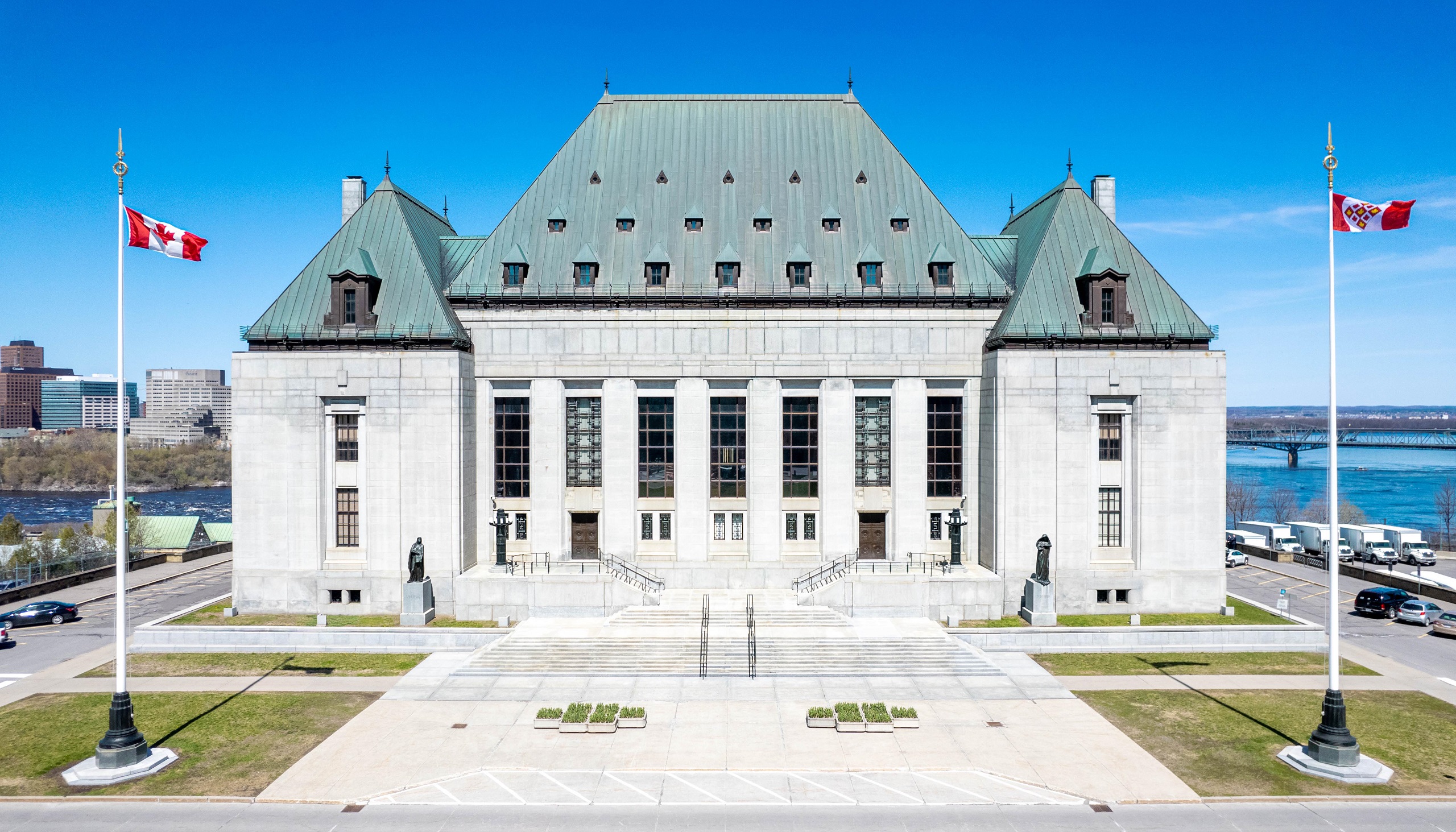
The Supreme Court of Canada was created in 1875 and has evolved considerably since then. Today, it is the final court of appeal in the Canadian judicial system. The Court first sat in the Railway Committee Room in the Parliament buildings. In 1882, the Court moved to its own small 2-storey building on the west side of Parliament Hill. It would be another 56 years before the construction of the building currently occupied by the Court would begin. After delays during the Second World War, the Court took possession of the building in 1946.
In 2025, the Supreme Court of Canada commemorated its 150th anniversary.
Today, we invite you to visit the Court’s building and learn more about the role, the history and the architecture of the Supreme Court of Canada.
You will be asked to go through a metal detector before entering the building.
To facilitate this process, we recommend that you familiarize yourself with the Court’s security screening procedures.
Physical environment
Accessible parking spaces are available at the Supreme Court of Canada and the building is wheelchair accessible. A ramp is located at the entrance along the eastern side of the building (when facing the building, this is the entrance along the right-hand wall of the building). All public elevators and ramps are large enough to accommodate wheelchairs and motorized scooters.
Visitors with visual impairments
To enrich your experience and understanding of the building, the Supreme Court provides a touchable scale model of the building and statues.
Once inside the Supreme Court of Canada, you will get the chance to visit and learn more about the grand entrance hall, the judges’ gallery, the main courtroom and Federal Court of Appeal courtroom.
Bilingual guide-interpreters will be located in each room, ready to provide information and answer your questions.
Photos are permitted in the building.
You will find public bathrooms via the judges’ gallery.
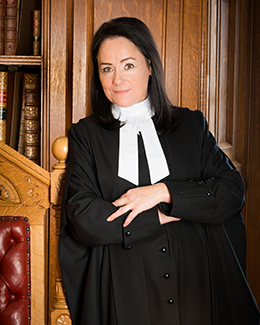
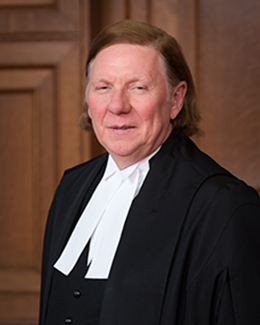
The Supreme Court of Canada consists of 9 judges, including a chief justice who is called the Chief Justice of Canada. All judges are appointed by the Governor in Council and must have been either a judge of a superior court or a member of at least 10 years’ standing at the bar of a province or territory.
Of the 9 judges, 3 must be appointed from Quebec. Traditionally, the Governor in Council has appointed 3 judges from Ontario, 2 from the Western provinces or Northern Canada and 1 from the Atlantic provinces.
The Chief Justice presides over all sittings of the Court at which they are present. The Chief Justice oversees the work of the Court by designating the panels of judges who will hear the cases and motions brought before it.

Chief Justice of Canada Appointed to the Supreme Court in 2012
Appointed Chief Justice in 2017